Iran President Awarded Stunning Honorary Doctorate in Pakistan


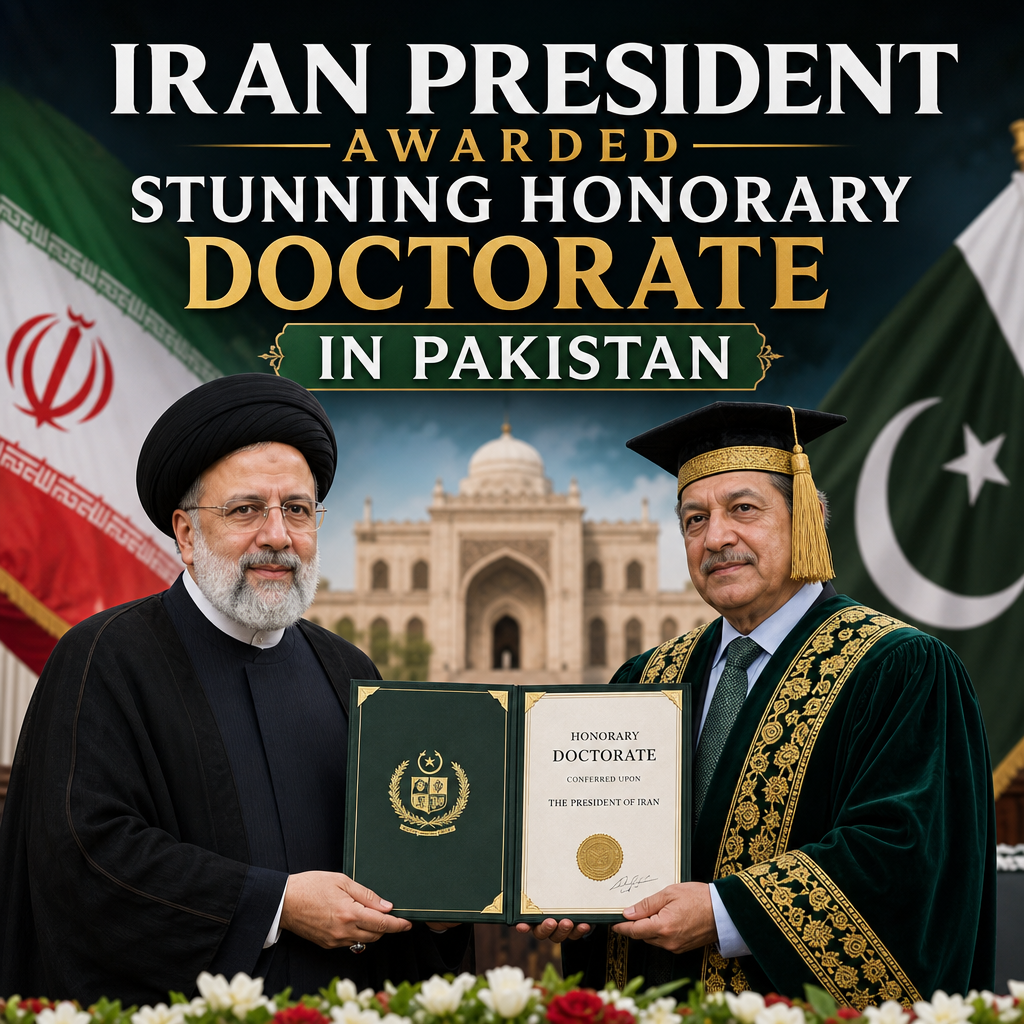
Iran President honorary doctorate in Pakistan became more than a ceremonial headline this week; it quickly turned into a small but revealing window on how Islamabad and Tehran want to present their relationship at a tense moment in regional politics. The award, presented during a high-profile visit, was framed by officials as a gesture of respect and academic recognition. But the wider significance lies in the message behind the ceremony: both countries are signaling that they want to keep bilateral ties steady, even as Middle Eastern and South Asian security pressures remain unpredictable.
At first glance, an honorary doctorate may seem purely symbolic. Yet in diplomacy, symbols matter. Universities are often used as soft-power platforms, especially when leaders want to project legitimacy, shared heritage, or a forward-looking partnership. In this case, the ceremony appears designed to emphasize cultural affinity and political warmth between Pakistan and Iran, rather than to mark a purely academic achievement. That distinction is important, because it helps explain why the event drew attention well beyond campus walls.



Iran President honorary doctorate in Pakistan and the politics of symbolism
The award comes at a time when both countries have reasons to be cautious and pragmatic. Iran is navigating sanctions, regional tensions, and ongoing disputes over security along its borders. Pakistan, meanwhile, is balancing difficult relationships with neighboring powers, internal economic stress, and its own security concerns. Against that backdrop, a public honor from a Pakistani institution is not just ceremonial polish; it is also a diplomatic signal that Islamabad wants to keep channels open with Tehran.
Coverage and commentary across international outlets tends to frame such moments differently. Al Jazeera’s reporting often emphasizes the regional and political context, particularly how gestures like this fit into broader diplomatic realignments and the search for stability. From that angle, the doctorate is less about ceremony and more about signaling continuity in a relationship that both sides benefit from maintaining.




RT-style coverage, by contrast, typically places stronger emphasis on multipolar diplomacy and resistance to Western pressure, often reading these exchanges as examples of countries building ties outside traditional U.S.-aligned frameworks. That lens tends to highlight the idea that Iran and Pakistan are asserting their own regional agency, regardless of outside expectations.
Sky News and other Western outlets are more likely to focus on the practical and security implications: whether the gesture reflects genuine progress in cooperation or merely a symbolic pause in a relationship that can still be strained by border insecurity, trade disputes, or regional rivalries. That perspective is useful because it keeps attention on whether the ceremony will translate into policy rather than remaining a one-day photo opportunity.
Why universities matter in diplomatic theater
Academic institutions may seem like unusual venues for foreign policy messaging, but they are often chosen precisely because they project prestige without the bluntness of a state banquet or military parade. An honorary doctorate can serve several purposes at once:
– it flatters the visiting leader and reinforces goodwill;
– it gives domestic audiences a visible sign of diplomatic importance;
– it allows hosts to frame bilateral relations in intellectual and civilizational terms;
– it softens the image of political meetings by wrapping them in cultural respect.
That does not mean the gesture is empty. On the contrary, soft power can create space for harder conversations later. If officials are trying to improve trade, border management, energy coordination, or transport links, a respectful public ceremony can help establish a friendlier atmosphere for negotiations.
Still, the limits of symbolism should not be overlooked. The relationship between Iran and Pakistan has faced recurring complications, including security concerns near the border and the challenge of aligning political priorities. A doctorate cannot solve those problems. It can, however, indicate that both sides see value in presenting unity rather than friction.
What the award suggests about regional priorities
The most useful way to read the event is neither as triumphalist propaganda nor as meaningless pageantry. It is better understood as a diplomatic balancing act. Pakistan appears to be telling Iran that it values the relationship and is willing to invest in visible goodwill. Iran, for its part, gains a platform to show that it has regional partners and remains part of the political conversation in South Asia.
There is also a broader strategic backdrop. In a region where alliances can shift quickly, public gestures like this can be used to reassure domestic audiences that leaders are not isolated. They can also be used to test whether cooperation is possible in areas where interests overlap, such as cross-border security, energy, trade corridors, and regional stability. None of those issues is simple, and none can be solved by ceremonial diplomacy alone. But the ceremony may help keep the conversation alive.
What stands out across the different ways this story is likely to be framed is that each outlet highlights a different layer of the same event. One sees diplomatic symbolism, another sees resistance to outside pressure, and another looks for practical consequences. Put together, those perspectives suggest a balanced conclusion: the honorary degree is best understood as a meaningful gesture, but not a transformative one.
In other words, the award matters because it reveals intention. It shows that Pakistan and Iran want to project friendship and mutual respect at a time when regional politics reward caution. Whether that intention turns into durable cooperation will depend on the harder work that follows the ceremony. For now, the doctorate is a reminder that diplomacy often begins with symbols before it reaches substance.